
5th & 6th Gen Chevy Camaro Wheels
Every Camaro from 2010 through 2024 runs the same 5×120 bolt pattern on a 66.9mm hub, which means one fitment can cover fifteen model years. Project 6GR builds that fitment at 20×10 +23 front and 20×11 +43 rear, the same geometry Chevrolet used on the factory ZL1 and SS 1LE forged wheels, in a wheel that comes in lighter at both corners.
- Hub-Centric
- Brembo Clearance Verified
- TPMS Compatible
- Structural Warranty
- JWL + VIA Certified
Chassis Fitment
Does This Fit My Camaro?
This fitment covers the 5th Gen Camaro from 2010 through 2015 and the 6th Gen from 2016 through 2024, coupe and convertible. The mounting interface never changed across either generation. Same 5×120 pattern, same 66.9mm hub, same M14x1.5 studs with 60 degree cone seat nuts. A wheel that bolts to a 2011 LS bolts to a 2023 ZL1.
That covers LS, LT, RS, LT1, SS, 1LE in every form, ZL1, ZL1 1LE, and Z/28.
Two trims deserve a direct answer before you go further. The Z/28 and the ZL1 1LE both left the factory on 19 inch forged wheels with tire packages nothing else on the platform shares, 19×11 and 19×11.5 on the Z/28 and 19×11 and 19×12 on the ZL1 1LE. Moving either car to a 20 inch setup works mechanically, and plenty of owners do it, but you are changing the car’s intended contact patch rather than replacing it. If you want to keep that package and go forged, talk to us and we will spec it.
Earlier Camaros are a different platform. Third and fourth generation F-bodies run 5×120.65 on a 70.3mm hub, which is the Corvette pattern, not this one. Nothing on this page transfers to them.
Will 5th Gen Wheels Fit a 6th Gen, and Vice Versa?
They bolt on. Whether you want them to is a different question, and this is the thing nobody in the aftermarket actually answers.
The hub interface is identical, so mounting is never the issue. What changes between the two cars is everything around it. The Gen 5 SS ran 20×8 +35 and 20×9 +40. The Gen 6 SS moved to 20×8.5 +25 and 20×9.5 +39. Put Gen 5 SS wheels on a Gen 6 and the front sits about 10mm further inboard than the car was drawn for, which reads as tucked rather than aggressive. Tire sizes do not carry across either, since the Gen 5 ran taller 245/45 and 275/40 where the Gen 6 runs 245/40 and 275/35.
Three things genuinely do not transfer. TPMS sensors are not cross-compatible between generations, and Gen 6 sensors vary by RPO with different part numbers, so plan on a set and a relearn. Center caps are different diameters and will not swap. And brake packages grew, which means a wheel that cleared a 2012 SS may not clear a 2019 SS 1LE.
The Project 6GR fitment sidesteps all of it, because it is machined for both cars rather than borrowed from one.
Factory Specs
5th Gen Camaro OEM Wheel Fitment (2010-2015)
The 5th Gen shipped in a wider spread of wheel sizes than most people remember. Base LS and LT cars ran an 18×7.5 +38 on a 245/55R18, a tall and narrow setup built around ride quality. Step up to a 2LT or add the RS package and you get 20×8 +35 front with 20×9 +40 rear on Pirelli PZero rubber, which is also exactly what the 1SS and 2SS ran.
Then the track cars arrive and the numbers change completely. The ZL1 and the SS 1LE both ran 20×10 +23 front and 20×11 +43 rear forged wheels. The ZL1 wore 285/35 front and 305/35 rear. The 1LE ran 285/35 at all four corners on the same staggered wheel, with side specific tires. Those offsets are stamped on the back of the wheel if you want to check your own car.
The Z/28 sits alone. 19×11 front and 19×11.5 rear forged, 305/30 square, Trofeo R, carbon ceramic brakes, and wider fender arches to make room for it.
Bolt Pattern
5×120
Hub Bore
66.9mm
Lug Hardware
M14x1.5
Lug Torque
140 ft-lbs
| Wheel Size | Offset (mm) | OEM Tire Size | Overall Diameter (in) | Trim / Pkg |
|---|---|---|---|---|
| 18" | ||||
| 18x7.5 | +38 | 245/55R18 | 28.6" | LS / 2LS / 1LT standard |
| 19" | ||||
| 19x8 | +38 | 245/50R19 | 28.7" | 1LT optional / 2LT |
| 19x11 | +11 | 305/30ZR19 | 26.2" | Z/28 front, forged |
| 19x11.5 | +32.25 | 305/30ZR19 | 26.2" | Z/28 rear, forged |
| 20" | ||||
| 20x8 | +35 | 245/45ZR20 | 28.7" | RS Package / 1SS / 2SS front |
| 20x9 | +40 | 275/40ZR20 | 28.7" | RS Package / 1SS / 2SS rear |
| 20x10 | +23 | 285/35ZR20 | 27.9" | ZL1 front, forged |
| 20x11 | +43 | 305/35ZR20 | 28.4" | ZL1 rear, forged |
| 20x10 | +23 | 285/35ZR20 | 27.9" | SS 1LE front, forged |
| 20x11 | +43 | 285/35ZR20 | 27.9" | SS 1LE rear, forged |
Factory Specs
6th Gen Camaro OEM Wheel Fitment (2016-2024)
The 6th Gen car is 20mm narrower overall than the 5th Gen and the wheel program reflects it. Base LS and LT cars moved up to 18×8.5 +32, wider and lower offset than the 5th Gen base wheel. The 1SS and 2SS run 20×8.5 +25 front and 20×9.5 +39 rear, on 245/40 and 275/35.
The SS 1LE and the ZL1 share a wheel package again, 20×10 +20 front and 20×11 +43 rear forged, on 285/30 and 305/30. Note what happened there. The rear is dimensionally identical to the 5th Gen car. The front moved 3mm outboard and the tires got shorter.
The ZL1 1LE is the outlier of the whole platform. 19×11 +11 front and 19×12 +41 rear on 305/30 and 325/30 Goodyear Supercar 3R.
One thing to check before you shop, and it is generation specific. Cars built from 2022 with the copper free brake option code BCD carry a larger caliper and rotor and cannot run 18 inch wheels at all. Nineteens are the floor on those cars. Know your brake RPO, not just your trim.
Bolt Pattern
5×120
Hub Bore
66.9mm
Lug Hardware
M14x1.5
Lug Torque
140 ft-lbs
| Wheel Size | Offset (mm) | OEM Tire Size | Overall Diameter (in) | Trim / Pkg |
|---|---|---|---|---|
| 18" | ||||
| 18x8.5 | +32 | 245/50R18 | 27.7" | 1LS / LS / 1LT / 2LT / 3LT standard |
| 19" | ||||
| 19x8.5 | +30 | 245/45R19 | 27.7" | LT optional |
| 19x11 | +11 | 305/30ZR19 | 26.2" | ZL1 1LE front, forged |
| 19x12 | +41 | 325/30ZR19 | 26.7" | ZL1 1LE rear, forged |
| 20" | ||||
| 20x8.5 | +25 | 245/40ZR20 | 27.7" | LT optional / LT 1LE / LT1 / 1SS / 2SS front |
| 20x9.5 | +39 | 275/35ZR20 | 27.6" | LT 1LE / LT1 / 1SS / 2SS rear |
| 20x10 | +20 | 285/30ZR20 | 26.7" | SS 1LE / ZL1 front, forged |
| 20x11 | +43 | 305/30ZR20 | 27.2" | SS 1LE / ZL1 rear, forged |
Torque and Hardware: Both generations use M14x1.5 studs with 60 degree cone seat lug nuts, torqued to GM’s published 190 Nm, which is 140 ft-lbs. A handful of lug torque charts list 110 ft-lbs for 2013 through 2015 cars and for 2012 cars with the blue coated nuts. If your car falls in that window and your owner’s manual says 110, follow the manual. Re-torque after the first 50 to 100 miles on any new set.
Verified Specs
Chevy Camaro Wheel Fitment
One staggered setup covers both generations. 20×10 +23 up front, 20×11 +43 out back, machined hub-centric to 66.9mm on the factory 5×120 pattern.
Those numbers are not a compromise we arrived at. They are the front and rear geometry Chevrolet engineered for the 5th Gen ZL1 and SS 1LE, which is the most aggressive fitment GM ever validated on a 20 inch Camaro wheel. On a 6th Gen car the rear is dimensionally identical to factory and the front sits 3mm inboard of the ZL1’s +20. You are running proven arch clearance, not a guess.
For tires, run 285/35R20 front and 305/35R20 rear if you want the taller 5th Gen ZL1 proportion, or 285/30R20 and 305/30R20 for the shorter 6th Gen look and a lower rolling diameter. A 275/35R20 front works if you prefer a little more sidewall protection on the street. All three combinations clear at stock ride height without fender work.
Bolt Pattern
5×120
Hub Bore
66.9mm
Lug Torque
140 ft-lbs
Recommended
20″
Staggered Setup
| Wheel Size | Offset (mm) | Recommended Tire | Overall Diameter (in) | Weight (lb) | Fitment Note |
|---|---|---|---|---|---|
| Setup 1 | Taller, more sidewall | |||||
| 20x10 | +23 | 275/35R20 | 27.6" | 25.50 | Front |
| 20x11 | +43 | 305/35R20 | 28.4" | 23.80 | Rear |
| Setup 2 | Wider, lower, flush | |||||
| 20x10 | +23 | 285/30R20 | 26.7" | 25.50 | Front |
| 20x11 | +43 | 315/25R20 | 26.2" | 23.80 | Rear, recalibrate speedometer |
Machined to 66.9mm: Our Camaro wheels are cut to the factory hub diameter, not to a generic bore with rings to take up the slack. The wheel seats on the hub and carries the load through it. That distinction matters more than the spec sheet makes it look. A wheel machined to 67.1mm leaves a tenth of a millimeter of radial play, which is tolerable. A universal 72.5mm bore leaves 2.8mm and relies entirely on the lug nuts to center and hold the wheel, which is why those wheels ship with plastic rings. We skip the problem instead of shipping the fix.
Factory TPMS sensors carry over on both generations using standard valve stems. Plan on a relearn after the swap, and note that a 5th Gen sensor will not work in a 6th Gen car if you are moving wheels between cars.
Pro Tip: Comparing this against your current setup or a big brake kit? Run the numbers through our wheel offset calculator before you order.
Engineering
Why Staggered Is the Right Answer on This Car
The Camaro is rear wheel drive with a live appetite for rear grip, and Chevrolet staggered every performance trim it built on this platform for that reason. The ZL1, the SS 1LE, the Z/28 and the ZL1 1LE all ran a wider rear than front. Following that is the correct call, and it separates this chassis from something like an AWD hatch where a square setup is the only mechanically sound option.
What makes the staggered choice work is the offset relationship, not the width difference. A 20×10 at +23 and a 20×11 at +43 do not just differ by an inch of barrel. The rear offset is 20mm higher, which pulls the extra inch inboard rather than pushing the whole wheel out into the quarter panel. Run a 20×11 at the front’s +23 and you would be a full 25mm further out at the fender lip, which is where people start rolling arches and dialing in camber they did not want.
Rolling Diameter, and Why the Tire Pairings Are What They Are
This is the part of staggered fitment almost nobody publishes, and it is the part that causes problems.
Your ABS and traction control systems read wheel speed at every corner and infer slip from the difference. That inference assumes a known front-to-rear rolling diameter relationship. Get too far away from it and the systems start managing a discrepancy the car does not actually have.
Run the numbers on the factory pairings and the logic shows up immediately. A 285/35R20 measures 27.85 inches tall. A 305/35R20 measures 28.41 inches. That is 0.56 inches of difference across the axles, which is what the 5th Gen ZL1 shipped with. Move to the 6th Gen sizes and a 285/30R20 is 26.73 inches against a 305/30R20 at 27.20 inches, a 0.47 inch spread. Both sit in the same narrow band.
The mistake we see is a 285 front paired with a 315/35 rear, which stretches the gap past an inch, sits more than 28mm taller than the OEM rear, and introduces roughly four percent of speedometer error on top of the clearance risk. Stay in the pairings above and none of that is a conversation.
Coming From 18's or 19's
Upsizing to 20 inch from a factory 18×8.5 or 19×8.5 is one of the most common moves on this platform, and it is worth being clear about what changes. Diameter goes up, sidewall comes down, and the contact patch gets significantly wider at both ends. Steering response sharpens and the car sits properly in its arches for the first time. Ride quality gets firmer, which is the honest trade. If your car has Magnetic Ride Control, the damping absorbs a good portion of that.
Brake Clearance
Camaro Brake Package Clearance by Trim
Brakes are the real fitment divider on this platform, and they vary far more within each generation than the hub ever does. A base LS runs a single piston front caliper. A ZL1 1LE runs a 390mm two piece rotor behind a six piston monobloc Brembo. Both cars have the same bolt pattern and the same hub bore.
At 20 inches, every factory Camaro brake package clears, including the largest. Chevrolet put the biggest brakes on the platform behind 19 inch wheels on the Z/28 and the ZL1 1LE, which settles the diameter question. What still matters at 20 inches is barrel and spoke geometry, because a caliper needs clearance across its width and its face, not just under the rim edge.
The TEN’s spoke profile clears the four piston SS Brembo, the six piston SS 1LE and ZL1 calipers, and the base packages on both generations, with no spacers and no modification. If you are running an aftermarket big brake kit, send us the kit and we will check it against the wheel before anything ships.
| Trim / Package | Front Rotor | Front Caliper | Rear Rotor | 20" Clearance |
|---|---|---|---|---|
| 5th Gen (2010-2015) | ||||
| LS / LT | 12.6" (321mm) | Single-piston | 12.4" (315mm) | Clears |
| 1SS / 2SS / SS 1LE | 14.0" (355mm) | 4-piston Brembo | 14.4" (365mm) | Clears |
| ZL1 | 14.6" (370mm) two-piece | 6-piston Brembo | 14.4" (365mm) | Clears |
| Z/28 | 15.5" (394mm) carbon ceramic | 6-piston monobloc | 15.4" (390mm) carbon ceramic | Clears |
| 6th Gen (2016-2024) | ||||
| LS / LT base | Single-piston | Single-piston | Single-piston | Clears |
| LT w/ Y4Q · LT 1LE · LT1 | 12.6" (321mm) | 4-piston Brembo | 4-piston | Clears |
| 1SS / 2SS | 13.6" (345mm) | 4-piston Brembo | 13.3" (339mm) | Clears |
| SS 1LE (J6M) | 14.6" (370mm) two-piece | 6-piston monobloc | 13.3" (339mm) | Clears |
| ZL1 / ZL1 1LE (J6H) | 15.35" (390mm) two-piece | 6-piston monobloc | 14.4" (365mm) | Clears |
Verified Suspension
Camaro Lowering Springs and Wheel Fitment
The 20×10 +23 and 20×11 +43 spec holds on a lowered car. Offset, bolt pattern and hub bore do not change with ride height. What changes is tire clearance under compression and your camber curve.
Drops in the 0.7 to 1.0 inch range cover the Eibach Pro-Kit, BMR Street Performance and Pedders Sports Ryder kits, and on the factory equivalent 285 and 305 tires there is nothing in that range that calls for camber correction or fender work on either generation.
Past about 1.25 inches, and specifically if you have put a 315 section tire on the rear, the picture changes. Owners report intermittent liner contact over dips at that point, and on 6th Gen cars with Magnetic Ride Control there is a wiring harness inside the driver side rear wheel well that a wide rear tire will find first. The fixes, in the order we would try them, are dropping to a 305/30, relocating that harness, and then adding negative camber.
Get an alignment after any suspension change. On a tracked car, dial in negative camber whether or not clearance demands it.
| Spring / Kit | Application | Front Drop | Rear Drop | Fitment Note |
|---|---|---|---|---|
| Mild drops, no correction needed | ||||
| Eibach Pro-Kit | 2016-2021 SS / SS 1LE | 0.7" | 0.7" | Clears on factory-equivalent tires |
| Eibach Pro-Kit (MRC) | 2017+ SS / 1LE w/ Magnetic Ride | 0.7" | 0.7" | Clears on factory-equivalent tires |
| BMR Street Performance SP041 | 2016+ V8, ZL1 / 1LE compatible | 0.75" | 1.0" | Clears on factory-equivalent tires |
| Pedders Sports Ryder | 2010-2015 | 1.18" (30mm) | 0.98" (25mm) | Clears; alignment required |
| Aggressive drops, plan on tire and camber changes | ||||
| H&R Sport 50770 | 2016-2024 1LE | 1.25" | 1.25" | Run 305/30 rear; alignment required |
| H&R Sport 28729-2 | 2016-2024 SS | 1.5-1.8" | 1.5-1.8" | Run 305/30 rear; camber correction |
| Coilovers | Both generations | Adjustable | Adjustable | Camber correction; check MRC harness |
Wheel Collection
Project 6GR Wheels for the 5th & 6th Gen Camaro
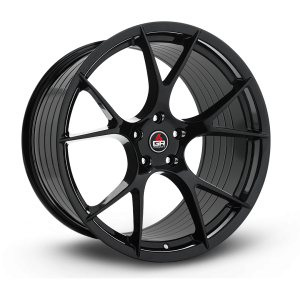
The Camaro fitment is built around the TEN in Spun Forged, at 20×10 +23 front and 20×11 +43 rear. Pick your finish and we build the set to your car. Pricing starts at $2,060 per wheel. 25.50 lb at 20×10 and 23.80 lb at 20×11. Ten spokes carried out to the edge of the barrel for a larger visual diameter and clean sightlines to the Brembos, which is the right call on a car where the brake package is part of the look. View the TEN.
Every model in our forged range can be built to this Camaro spec or to a spec of your own. That covers the TEN Forged, the TEN-R, the SEVEN v2, and the two piece TEN-L. It also covers the fitments this page does not: a 19 inch package for a Z/28 or ZL1 1LE owner keeping the factory tire program, a wider stance setup, or a big brake kit that changes the clearance math. Talk to a fitment expert and we will work out the numbers before anything gets machined. Finishes are open across the full custom range.
Unsprung Mass
Lighter Than the Factory Forged Wheel It Replaces
Weight at the wheel is unsprung and rotating, so removing it does more work than removing it anywhere else on the car. The suspension follows the road more closely, turn-in sharpens, and the brakes and driveline have less rotational inertia to overcome.
Here is where the numbers land, and the comparison is worth reading carefully because the benchmark is not a cast wheel.
The 5th Gen ZL1 and SS 1LE ran a forged 20×10 and 20×11 from the factory, scaled by owners at roughly 28.0 lb and 28.6 lb. Our TEN at the identical sizes and offsets comes in at 25.50 lb front and 23.80 lb rear. That is 2.50 lb off each front corner and 4.80 lb off each rear, about 14.6 lb of unsprung mass removed from a car that already had a good wheel on it.
Against a 6th Gen SS the gap is wider, because that car runs cast. The factory 20×8.5 weighs about 29.3 lb and the 20×9.5 about 32.3 lb. Our TEN is lighter than both while being an inch and a half wider at each end, which is the argument for the construction in one line.
The Spun Forged process starts with a cast blank that is spun and formed under high pressure while heated. Compressing the barrel material yields a wheel that is lighter and stronger than a conventional cast wheel, without the lead time or cost of a full billet forging.
| Wheel | Size | Construction | Weight (lb) | Project 6GR TEN Saves |
|---|---|---|---|---|
| Front | 20x10 | ||||
| Project 6GR TEN | 20x10 +23 | Spun Forged | 25.50 | Baseline |
| 5th Gen ZL1 / SS 1LE OEM | 20x10 +23 | Forged | 28.00 | 2.50 lb per corner |
| 6th Gen 1SS / 2SS OEM | 20x8.5 +25 | Cast | 29.30 | 3.80 lb per corner, 1.5" wider |
| 6th Gen ZL1 OEM | 20x10 +20 | Forged | 33.00 | 7.50 lb per corner |
| Rear | 20x11 | ||||
| Project 6GR TEN | 20x11 +43 | Spun Forged | 23.80 | Baseline |
| 5th Gen ZL1 / SS 1LE OEM | 20x11 +43 | Forged | 28.60 | 4.80 lb per corner |
| 6th Gen 1SS / 2SS OEM | 20x9.5 +39 | Cast | 32.30 | 8.50 lb per corner, 1.5" wider |
| 6th Gen ZL1 OEM | 20x11 +43 | Forged | 33.00 | 9.20 lb per corner |
| Full set | Unsprung mass removed per car | ||||
| Project 6GR TEN set | 20x10 / 20x11 | Spun Forged | 98.60 | Baseline |
| 5th Gen ZL1 / SS 1LE OEM set | 20x10 / 20x11 | Forged | 113.20 | 14.60 lb total |
| 6th Gen 1SS / 2SS OEM set | 20x8.5 / 20x9.5 | Cast | 123.20 | 24.60 lb total |
| 6th Gen ZL1 OEM set | 20x10 / 20x11 | Forged | 132.00 | 33.40 lb total |
Real Customer Builds
Camaro Builds Running Project 6GR
The Difference
Why Camaro Owners Run Project 6GR
Factory ZL1 Geometry
20x10 +23 and 20x11 +43 is the specification Chevrolet validated on its own forged track wheels. We build to it rather than around it, which is why the arch clearance is known before your car ever sees the wheel.
JWL + VIA Certified
Independently tested to Japanese Light Alloy Wheel and Vehicle Inspection Association standards. Backed by a lifetime structural defect warranty and a one-year finish warranty.
Machined to 66.9mm
Cut to the exact factory hub diameter on both generations. The wheel rides on the hub, carries the load correctly, and never needs a centering ring.
Clears Factory Brake Packages
Verified against the four piston SS Brembo, the six piston SS 1LE and ZL1 calipers, and the base packages on both generations. No spacers, no modification. Factory TPMS sensors carry over.
Common Questions
Camaro Wheel FAQ
Project 6GR builds one verified fitment for both generations: 20x10 with a +23 offset front and 20x11 with a +43 offset rear. That is the same geometry Chevrolet used on the 5th Gen ZL1 and SS 1LE forged wheels. It clears every factory brake package on both cars and fits at stock ride height without fender work.
Every Camaro from 2010 through 2024 uses a 5x120 bolt pattern, sometimes written as 5x4.72 inches, with M14x1.5 studs and 60 degree cone seat lug nuts torqued to 140 ft-lbs. It did not change between the 5th and 6th generations. Third and fourth generation F-body Camaros are different, running 5x120.65.
The Camaro hub measures 66.9mm on both generations. Project 6GR wheels are machined hub-centric to that exact figure, so the wheel seats on the hub and carries the load through it. No centering rings, ever. Some aftermarket brands machine Camaro wheels to 67.1mm, which leaves a tenth of a millimeter of radial clearance and still works. What does not work is a universal 72.5mm bore, which leaves 2.8mm of slack and relies on plastic rings and the lug nuts to do the hub's job.
They bolt on, since both generations share the 5x120 pattern and the 66.9mm hub. Three things do not transfer. TPMS sensors are not cross-compatible and Gen 6 sensors vary by RPO. Center caps are different diameters between generations. And brake packages grew across the platform, so a wheel that cleared a 2012 SS may not clear a 2019 SS 1LE. Gen 5 SS wheels also sit about 10mm more tucked on a Gen 6 because the factory offsets changed.
Staggered. Chevrolet staggered every performance trim it built on this platform, from the ZL1 to the SS 1LE to the ZL1 1LE. On a rear wheel drive car with this much power, the wider rear is doing real work. What matters is the offset relationship rather than just the width, which is why our rear runs +43 against the front's +23.
Run 285/35R20 front with 305/35R20 rear for the taller 5th Gen ZL1 proportion, or 285/30R20 with 305/30R20 for the shorter 6th Gen look. A 275/35R20 front works if you want a bit more sidewall for street duty. All three clear at stock ride height. We would steer you away from a 315/35 rear, which sits more than an inch taller than the front tire, adds roughly four percent of speedometer error, and is the size owners report rubbing on.
Yes. At 20 inches every factory Camaro brake package clears, including the six piston monobloc setups on the SS 1LE and ZL1. Chevrolet put its largest brakes behind 19 inch wheels on the Z/28 and ZL1 1LE, so diameter is not the constraint at this size. Spoke and barrel geometry is, and the TEN is profiled for it. Running an aftermarket big brake kit, send us the kit and we will verify before anything ships.
Yes. Bolt pattern, hub bore and offset do not change with ride height. Drops in the 0.7 to 1.0 inch range, which covers the Eibach Pro-Kit, BMR and Pedders kits, need no camber correction or fender work on the factory equivalent tires. Past 1.25 inches, especially with a 315 rear, plan on dropping to a 305/30 and getting a proper alignment. On 6th Gen cars with Magnetic Ride Control, watch the wiring harness in the driver side rear wheel well.
They bolt on, but both cars left the factory on 19 inch wheels with tire packages nothing else on the platform shares. Moving to 20s changes the contact patch those cars were developed around. If you want to keep the factory program and go forged, we build custom to spec. Contact us and we will work out the sizing.
Your TPMS sensors carry over using standard valve stems on both generations, and a relearn is required after any wheel swap. Center caps are model specific, so tell us your generation and trim when you order and we will confirm cap fitment for your car. Note that 5th Gen and 6th Gen OEM caps are different diameters and do not interchange.
Yes. Chevrolet published no separate bolt pattern, hub bore, torque spec or factory wheel size for the convertible on either generation, and the fitment carries over. Worth knowing if you are also shopping suspension: lowering springs are frequently convertible specific even though the wheels are not.
Ready to Dial In Your Camaro?
One verified fitment, built to the geometry Chevrolet validated on its own forged track wheels, in a wheel that comes in lighter at both corners. Pick your finish and we build it to your car.
Not Sure Yet?
Send us your year, trim and brake package and get a direct answer from someone who specs this chassis every week.

