
Dodge Challenger & Charger Wheels
Every Charger built since 2006 and every Challenger built since 2008 runs the same 5×115 bolt pattern on a 71.6mm hub, which means one fitment covers close to two decades of both cars. Project 6GR builds that fitment staggered at 20×9.5 +14 front and 20×11 +20 rear, machined hub-centric, and it is the exact setup running on every Dodge in our gallery.
- Hub-Centric
- Brembo Clearance Verified
- TPMS Compatible
- Structural Warranty
- JWL + VIA Certified
Chassis Fitment
Does This Fit My Charger or Challenger?
This fitment covers the Dodge Charger across the LX years from 2006 through 2010 and the LD years from 2011 through 2024, and the Dodge Challenger across the LC run from 2008 through 2024. The mounting interface never changed in either car. Same 5×115 pattern, same 71.6mm hub, same M14x1.5 studs with 60 degree conical seat nuts. A wheel that bolts to a 2007 Charger R/T bolts to a 2023 Challenger Hellcat.
That covers SE, SXT, GT, R/T, Road/Track, Daytona, Super Bee, Scat Pack, SRT8, SRT 392, SRT Hellcat, Redeye, Jailbreak and Super Stock.
Two things to get straight before you go further:
There is no 2006 or 2007 Challenger. The LC car arrived for 2008, and every single 2008 Challenger was an SRT8 on a 20×9 forged wheel. If you are shopping for a 2006 or 2007 car, you have a Charger.
Rear-wheel drive only. The all-wheel-drive Charger and Challenger are a different fitment problem, and we do not publish this spec for them. Dodge put AWD cars on a 7.5 inch wide wheel at +55 offset and never offered an AWD car wider than 20×8 from the factory. The AWD front hub carries a halfshaft and a different knuckle, and the AWD track width is actually narrower than the rear-wheel-drive car. A 20×9.5 at +14 moves the wheel 41mm outboard of the factory AWD position and adds inboard depth into the space that halfshaft occupies. Nobody publishes a clearance envelope for it, including Dodge, so we are not going to guess at one. If you have an AWD car, talk to our fitment team and we will work it out with your specific car in front of us.
The same 5×115 pattern also appears on the Chrysler 300 and the Dodge Magnum. A shared bolt pattern is not a fitment, and we have not validated this setup on either car.
Will Charger Wheels Fit a Challenger, and Vice Versa?
They bolt on, in both directions, across every rear-wheel-drive year of both cars. The hardware is identical. Whether you want a particular wheel on a particular car is the more useful question, and it comes down to three things.
Factory offsets vary a lot by trim. A narrowbody SRT wheel is 20×9.5 at +18.5. A widebody wheel is 20×11 at -2.5. That is a 21mm spread in offset on top of a 1.5 inch spread in width. Put a widebody wheel on a narrowbody car and you are 40mm further out at the fender lip than the car was drawn for. Go the other way and the wheel sits deep inside a flared arch.
TPMS splits at one point in the timeline. Charger sensors from 2006 and 2007 run at 315MHz. Everything from 2008 forward on both cars runs at 433MHz. Those early sensors do not share parts with later cars, and stem style varies clamp-in or snap-in depending on how your car was built, so the sensor has to be matched to the car rather than the model year.
Center caps are trim specific. They do not interchange freely across the platform.
The Project 6GR fitment is machined for both cars rather than borrowed from one trim of one of them.
Factory Specs
Dodge Charger OEM Wheel Fitment
Every Charger from 2006 through 2024 uses a 5×115 bolt pattern on a 71.6mm hub with M14x1.5 studs. The wheel sizes on top of that interface changed enormously across those years.
The LX car started narrow. A 2.7 or 3.5 liter SE or SXT ran a 17×7 at +22 on a 215/65R17, built for ride quality. An R/T moved to 18×7.5 at +24, and adding the Road/Track or Daytona package put you on a 20×8 at +24 with a 245/45ZR20. The SRT8 went to a 20×9 at +25.5.
The LD car repeated the pattern and then extended it. Base and SXT cars stayed on 17 and 18 inch wheels. R/T cars ran a 20×8 at +24. The Scat Pack moved to 20×9 at +22.5, and the Dynamics Package took it to 20×9.5 at +18.5. The SRT 392 and the narrowbody Hellcat ran that same 20×9.5 at +18.5 on a 275/40ZR20.
Then the widebody cars arrive and the numbers change completely. Scat Pack Widebody, Hellcat Widebody and Redeye Widebody all ran a 20×11 at -2.5 on a 305/35ZR20. That negative offset is the single most important number on this platform, and it is covered in its own section below.
AWD cars sit outside all of this on a 19×7.5 at +55.
Bolt Pattern
5×115
Hub Bore
71.6mm
Lug Hardware
M14x1.5
Seat Type
60° Cone
| Wheel Size | Offset (mm) | OEM Tire Size | Overall Diameter (in) | Years | Trim / Pkg |
|---|---|---|---|---|---|
| 17" | |||||
| 17x7 | +22 | 215/65R17 | 28.0" | 2006-2010 | 2.7 / 3.5 SE, SXT |
| 17x7 | +22 or +24 | 215/65R17 | 28.0" | 2011-2024 | 3.6 SXT |
| 18" | |||||
| 18x7.5 | +24 | 225/60R18 | 28.6" | 2006-2010 | 5.7 R/T |
| 18x7.5 | +24 | 235/55R18 | 28.2" | 2006-2024 | SXT, R/T |
| 18x7.5 | +55 | 225/60R18 | 28.6" | 2006-2010 | AWD SXT, AWD R/T |
| 19" (AWD only) | |||||
| 19x7.5 | +55 | 235/55R19 | 29.2" | 2011-2024 | AWD SXT, AWD GT |
| 20" Square | |||||
| 20x8 | +24 | 245/45ZR20 | 28.7" | 2006-2024 | R/T Road/Track, Daytona R/T |
| 20x9 | +25.5 | 245/45ZR20 | 28.7" | 2006-2014 | SRT8 6.1 and 6.4 |
| 20x9 | +22.5 | 245/45ZR20 | 28.7" | 2015-2024 | Scat Pack 6.4 |
| 20x9.5 | +18.5 | 275/40ZR20 | 28.7" | 2015-2024 | SRT 392, Hellcat narrowbody, Scat Pack w/ Dynamics Pkg |
| 20x11 | -2.5 | 305/35ZR20 | 28.4" | 2016-2024 | Scat Pack Widebody, Hellcat Widebody, Redeye Widebody |
Factory Specs
Dodge Challenger OEM Wheel Fitment
The Challenger shares the Charger’s 5×115 pattern, 71.6mm hub and M14x1.5 hardware from its 2008 launch through 2024. The wheel program is close to the Charger’s, with one notable opening act.
Every 2008 Challenger was an SRT8, and it ran a 20×9 fully forged aluminum wheel with a genuinely staggered tire package from the factory, 245/45R20 front and 255/45R20 rear on Goodyear F1 Supercars. That is the only staggered factory tire fitment on the platform, and it disappeared after the first model year.
From 2009 forward the SE, SXT and GT cars ran 17×7 and 18×7.5 wheels, R/T cars ran 18×7.5 or a 20×8 at +24, and the SRT8 moved to 20×9 at +25.5. The 6.4 liter Scat Pack from 2014 spans three different factory wheels depending on how the car was optioned: 20×9 at +22.5, 20×9.5 at +18.5, and 20×11 at -2.5 on widebody cars.
The Hellcat and Redeye follow the Charger exactly. Narrowbody cars ran 20×9.5 at +18.5 with a 275/40ZR20. Widebody cars ran 20×11 at -2.5 with a 305/35ZR20. The Super Stock pushed that to a 315/40ZR20 on the same wheel.
Bolt Pattern
5×115
Hub Bore
71.6mm
Lug Hardware
M14x1.5
Seat Type
60° Cone
| Wheel Size | Offset (mm) | OEM Tire Size | Overall Diameter (in) | Years | Trim / Pkg |
|---|---|---|---|---|---|
| 17" and 18" | |||||
| 17x7 | +22 | 215/65R17 | 28.0" | 2008-2010 | 3.5 SE, SXT |
| 18x7.5 | +24 | 235/55R18 | 28.2" | 2008-2024 | SE, SXT, GT, R/T |
| 19" (AWD only) | |||||
| 19x7.5 | +55 | 235/55R19 | 29.2" | 2017-2024 | AWD SXT, AWD GT |
| 20" Staggered (factory) | |||||
| 20x9 | +25.5 | F245/45R20 R255/45R20 |
F28.7" R29.0" |
2008 only | SRT8 6.1, forged |
| 20" Square | |||||
| 20x8 | +24 | 245/45ZR20 | 28.7" | 2008-2024 | R/T 5.7 |
| 20x9 | +25.5 | 245/45ZR20 | 28.7" | 2010-2021 | SRT8 6.4, SRT 392 |
| 20x9 | +22.5 | 245/45ZR20 | 28.7" | 2014-2024 | R/T Scat Pack 6.4 |
| 20x9.5 | +18.5 | 275/40ZR20 | 28.7" | 2014-2024 | Hellcat narrowbody, Redeye, SRT 392 w/ Dynamics Pkg |
| 20x11 | -2.5 | 305/35ZR20 | 28.4" | 2018-2024 | Scat Pack Widebody, Hellcat Widebody, Redeye Widebody |
| 20x11 | -2.5 | 315/40ZR20 | 29.9" | 2022-2024 | SRT Super Stock |
Torque, and why one number will not do: the bolt pattern held steady for two decades, the torque spec did not. Dodge published 135 Nm on the early LX and LC cars, 150 Nm on the 2011 to 2014 cars, and 176 Nm on 2015 and later base and R/T cars. On top of that, the 2020 Challenger owner manual lists a lower figure for SRT models than for base models on the same car, 111 ft-lbs against 130 ft-lbs, and the Demon 170 is its own outlier at 185 Nm with a 150 Nm pre-run check. Torque to the figure in your own owner manual, and re-torque after the first 50 to 100 miles on any new set.
One hardware note worth acting on: two-piece capped lug nuts on these cars are a known failure point, because the cap can swell and deform and then the socket no longer fits properly. Run one-piece nuts with the correct 60 degree conical seat on aftermarket wheels. See full table below.
| Application | Years | Published Torque | ft-lbs | Thread | Seat |
|---|---|---|---|---|---|
| Charger | |||||
| Charger LX, all engines | 2006-2010 | 135 Nm | 99.6 | M14x1.5 | 60 degree cone |
| Charger LD | 2011-2014 | 150 Nm | 110.6 | M14x1.5 | 60 degree cone |
| Charger LD, base and R/T | 2015-2024 | 176 Nm | 129.8 | M14x1.5 | 60 degree cone |
| Charger SRT | 2015-2024 | 150 Nm | 110.6 | M14x1.5 | 60 degree cone |
| Challenger | |||||
| Challenger LC, all engines | 2008-2010 | 135 Nm | 99.6 | M14x1.5 | 60 degree cone |
| Challenger LC | 2011-2014 | 150 Nm | 110.6 | M14x1.5 | 60 degree cone |
| Challenger LC, base and R/T | 2015-2024 | 176 Nm | 129.8 | M14x1.5 | 60 degree cone |
| Challenger SRT models | 2015-2024 | 150 Nm | 110.6 | M14x1.5 | 60 degree cone |
| Challenger SRT Demon 170 | 2023 | 185 Nm | 136.0 | M14x1.5 | 60 degree cone |
Dodge Charger & Challenger Wheel Fitment
Verified Specs
One staggered setup covers both cars and every rear-wheel-drive year. 20×9.5 at +14 up front, 20×11 at +20 out back, machined hub-centric to 71.5mm on the factory 5×115 pattern, in the TEN, the SEVEN and the FIVE.
The front sits 4.5mm outboard of the factory SRT 9.5 inch wheel at the same width, so it reads as slightly more filled without changing the geometry the car was developed around. The rear is where the work happens. An 11 inch wheel at +20 puts the extra width inboard rather than pushing the whole assembly out at the quarter panel, which is what makes it live on a narrowbody car at stock ride height.
Three tire packages, and the first two are running on customer cars in our gallery right now.
Setup 1, factory diameter. 275/40R20 front with 305/35R20 rear. Both are factory sizes on this platform. Rolling diameters land at 28.66 and 28.41 inches, within a quarter inch of each other and within a quarter inch of the factory rear, so your speedometer stays honest and there is real sidewall at both ends. This is the setup for a car that gets driven.
Setup 2, the one most of our cars run. 275/35R20 front with 305/35R20 rear. Five of the six Dodge builds in our gallery are on this exact package, including a Challenger SRT 392 on the SEVEN and a Scat Pack on the FIVE. The shorter front sidewall tightens the front end visually and sharpens steering feel, the rear stays at the factory widebody size, and the speedometer is unaffected because the rear diameter has not changed.
Setup 3, maximum rear. 275/35R20 front with 315/35R20 rear. This is the white Charger SRT Hellcat on the TEN in our gallery. A 315/35R20 measures 28.68 inches, identical to the factory 245/45R20 rear diameter, so the speedometer is dead accurate. It is the widest package we recommend and the one that needs the most attention paid to ride height, camber and tire brand on a narrowbody car.
One thing we will not recommend on either car: a 30 series rear. A 305/30R20 comes out 5.2 percent under the factory diameter and a 315/30R20 is 4.3 percent under, both of which put your speedometer well out and drop the rear below the front. You lose the stagger and you lose accuracy in the same move.
Bolt Pattern
5×115
Hub Bore
71.5mm
Fitment
Staggered
Recommended
20″
Staggered Setup
| Setup | Front | Offset | Rear | Offset | Tires | Overall Diameter | Speedometer | Verified On |
|---|---|---|---|---|---|---|---|---|
| Recommended | ||||||||
| Factory Spec | 20x9.5 | +14 | 20x11 | +20 | F275/40R20 R305/35R20 |
F28.7" R28.4" |
Accurate | Factory tire sizes |
| 6GR Spec | 20x9.5 | +14 | 20x11 | +20 | F275/35R20 R305/35R20 |
F27.6" R28.4" |
Accurate | Five of six gallery builds |
| Max Rear Tire | 20x9.5 | +14 | 20x11 | +20 | F275/35R20 R315/35R20 |
F27.6" R28.7" |
Accurate | White Charger Hellcat, TEN |
| Not recommended | ||||||||
| 30 Series | 20x9.5 | +14 | 20x11 | +20 | F275/35R20 R305/30R20 |
F27.6" R27.2" |
5.2% under | Inverts the stagger |
| 30 Series | 20x9.5 | +14 | 20x11 | +20 | F275/35R20 R315/30R20 |
F27.6" R27.4" |
4.3% under | Inverts the stagger |
Machined to 71.5mm on a 71.6mm hub: that is a tenth of a millimeter across the diameter, which is five hundredths of a millimeter of radial clearance. It is a line-to-line pilot fit. The wheel seats on the hub and carries the load through it, which is what hub-centric actually means.
The reason that matters is what the alternative looks like. A universal 72.5mm bore leaves nearly a millimeter of radial slack and relies on the lug nuts to both center and hold the wheel, which is why those wheels arrive in a box with a bag of plastic rings. We machine to the hub instead of shipping the fix for not having done so.
Factory TPMS sensors carry over on 2008 and later cars using standard valve stems. Plan on a relearn after the swap, and note that a 2006 or 2007 Charger runs a different sensor at a different frequency.
Pro Tip: Comparing this against your current wheels or working around a big brake kit? Run the numbers through our wheel offset calculator before you order.
The Fitment Divider
Widebody or Narrowbody Decides Everything at the Rear
This is the question that matters most on a Charger or Challenger, and almost nobody in the aftermarket answers it with numbers.
The widebody package adds 3.5 inches, 89mm, of body width through its fender flares. On a 2021 Charger that takes front track from 63.4 inches to 65.6 inches and rear track from 63.8 inches to 65.3 inches. It is not a cosmetic kit. It arrived alongside a six-piston Brembo package, Bilstein three-mode adaptive damping, and the 20×11 wheel with a 305/35ZR20 that the flares exist to cover.
The offset is where the two cars separate. The widest wheel a narrowbody car ever got from the factory was a 20×9.5 at +18.5. The widebody car got a 20×11 at -2.5, which is 21mm of offset and 1.5 inches of width in one step. The Mopar flare kit is rated to a 315mm tire.
Our 20×11 at +20 sits 22.5mm less far out than that factory widebody wheel, and 22.5mm deeper inboard. Run it on a widebody car and you get the full 11 inches of width with the tire sitting inside the flare rather than filling it to the edge. Run it on a narrowbody car and the arch does the work of containing an 11 inch wheel, which is exactly what the offset was chosen for.
Both work. They look different, and now you know which one you are choosing.
Where a Wide Rear Actually Rubs
Here is the part of narrowbody fitment that gets learned the expensive way. On these cars the limiting contact point at the rear is inboard, not at the fender lip.
Owners running 305 and 315 section tires on a 20×11 narrowbody setup consistently report the same two things. The tire finds the inner fender liner, and it finds a formed metal protrusion inside the wheel well. It happens under suspension compression and at steering lock rather than at static ride height, so the car can look perfectly clean parked and still make contact over a dip. Camber changes the outcome, and so does tire brand, because molded width varies between manufacturers on the same printed size.
That is why we ask about ride height and alignment before a set ships, and why nobody should promise you a 315 on a narrowbody car sight unseen.
| Spring / Kit | Best For | Typical Drop | Notes |
|---|---|---|---|
| Mild drops, no correction needed on Setup 1 tires | |||
| Eibach Pro-Kit E10-27-004 | Street / Daily | 0.6" F / 1.1" R | Published figure for the 2015-2024 Challenger SRT 392. Clears on factory-equivalent tire sizes. |
| Eibach Pro-Kit E10-27-004 | Street / Daily | 0.8" F / 1.3" R | Published figure for the 2015-2024 Challenger Scat Pack. Clears on factory-equivalent tire sizes. |
| Eibach Pro-Kit E10-27-004 | Street / Daily | 0.9" F / 0.9" R | Published figure for the 2015-2024 Challenger SRT Hellcat. Even drop front to rear. |
| Mopar Stage 1 P4510854 | Street / OEM+ | 1.0" F / 1.0" R | 2006-2019 Charger 5.7 RWD. Excludes cars with adaptive damping, sales code SMC. |
| Mopar Stage 1 P5155436 | Street / OEM+ | up to 1.0" | 2008-2019 Challenger V8. Excludes cars with adaptive damping, sales code SMC. |
| BMR SP110 | Street / Track | 1.25" F / 1.25" R | 2008-2018 Challenger. Square drop. Alignment required after install. |
| Aggressive drops, plan on tire and camber changes | |||
| Eibach Pro-Kit 28111.140 | Stance / Aggressive | 1.40" F / 1.70" R | 2011-2023 Challenger R/T. Run the 305/35 rear at this ride height. Alignment required. |
| Eibach Pro-Kit 2876.140 | Stance / Aggressive | 1.40" F / 1.70" R | 2006-2010 Charger V6. Run the 305/35 rear at this ride height. Alignment required. |
| H&R Sport 50888 | Stance / Aggressive | 1.7" F / 1.4" R | 2015-2022 Challenger SRT including Scat Pack and Widebody. Drop varies by engine, battery package and options. Check the inner liner with a 315 rear. |
| Mopar Stage 3 Coil-Over P5155942 | Track / Adjustable | 1.25" F / 1.25" R | 2011-2019 Challenger V8 and Charger. Not compatible with AWD cars. |
| Coilovers | Track / Adjustable | Adjustable | Both cars. Camber correction available. Verify inner liner clearance at your chosen ride height. |
Engineering
Why We Stagger a Platform Dodge Built Square
Start with the honest part. Every factory fitment on the Charger and the Challenger is square. Same width front and rear, every trim, every year, from a 17×7 SE to a 20×11 Hellcat Widebody. The one exception is the staggered tire package on the 2008 Challenger SRT8, and even that ran the same 20×9 wheel at both ends.
A square setup has real advantages. One tire SKU, rotatable, one spare. It works.
What it does not do is put the widest available contact patch where this chassis needs it most. A Scat Pack makes 485 horsepower at the rear wheels. A Hellcat makes 717, a Redeye 797. Every one of those cars is rear-wheel drive with a long wheelbase and real mass over the back axle under acceleration. Adding 1.5 inches of rear tire and taking nothing off the front is the change that answers that, and it is why the aftermarket has converged on a 20×11 rear on this platform regardless of brand.
The offset relationship is what makes it work rather than the width difference. Our rear runs +20 against the front’s +14, so the extra inch and a half of barrel is pulled inboard rather than pushed out toward the quarter panel. Build that same 20×11 at the front’s +14 and you would sit 6mm further out at the fender lip with the inboard clearance unchanged, which is the direction that starts conversations about rolling arches.
Where a Wide Rear Actually Rubs
This is the part almost nobody publishes, and it is the part that decides whether a setup lives with the car or fights it.
Wheel speed is read at every corner, and your ABS and traction control infer slip from the difference between those readings. On a rear-wheel-drive car the speedometer keys off the driven axle, which means the rear tire diameter is the one that moves the needle. Change it and you change what the car thinks is happening.
Here is where the three packages land against a factory rear. A 305/35R20 measures 28.41 inches, which is nine tenths of a percent under the factory 245/45R20 at 28.68 inches. A 315/35R20 measures 28.68 inches, which is identical. Both are speedometer-honest without recalibration, and that is the whole reason those two sizes are the only rears we recommend.
Front to rear, Setup 1 runs a 28.66 inch front against a 28.41 inch rear, so the rear is a quarter inch smaller, which is the closest thing to factory intent available in a staggered setup. Setups 2 and 3 run the shorter 275/35 front at 27.58 inches, which puts the rear 0.83 and 1.10 inches taller respectively. That is the aggressive direction, it is visually stronger, and it does not touch your speedometer because the rear has not moved.
One caution about published numbers. Nominal tire arithmetic and molded reality are not the same thing. Dodge lists the factory Pirelli 305/35ZR20 at 731 revolutions per mile where the nominal calculation gives 710, a three percent gap. Use the tire maker’s own revs-per-mile figure for the specific tire you are buying if you want the number to be exact.
Coming From 18s or 20x8s
Moving to a 20×9.5 and 20×11 from a factory 18×7.5 or 20×8 is the most common upgrade path on this platform. Diameter stays close, sidewall comes down, and the contact patch gets substantially wider at both ends. Steering response sharpens, the car sits properly in its arches, and the brake package finally becomes visible behind the spokes. Ride quality gets firmer, which is the honest trade. On cars with adaptive damping the dampers absorb a fair share of it.
Brake Clearance
Charger and Challenger Brake Clearance by Trim
Brakes vary more across these cars than the hub ever does. A base SXT runs a 320mm rotor behind a single piston sliding caliper. A Charger SRT Hellcat runs a 400mm two-piece rotor behind a six-piston Brembo monoblock. Both cars have the same bolt pattern and the same hub bore.
At 20 inches, every factory brake package on the platform clears, including the largest. That is not a claim we are estimating, it is arithmetic on what Dodge shipped: the 390mm Challenger SRT front brake and the 400mm Charger SRT front brake both arrived from the factory under a 20 inch wheel. Diameter is settled at this size.
What still matters is barrel and spoke geometry, because a six-piston caliper needs clearance across its width and its face rather than just under the rim edge. The TEN, SEVEN and FIVE spoke profiles clear the four-piston Brembo on the Scat Pack and SRT8, the six-piston monoblock on the Hellcat and Redeye, and the Sport and Performance packages on base and R/T cars, with no spacers and no modification.
Running an aftermarket big brake kit? Send us the kit and we will check it against the wheel before anything ships.
| Package | Standard On | Front Rotor | Front Caliper | Rear Rotor | 20" Clearance |
|---|---|---|---|---|---|
| Base and touring packages | |||||
| Sport / Touring | SE, SXT | 12.6" (320 x 28) | Single piston sliding | 12.6" (320 x 10) | Clears |
| Performance | GT, R/T, AWD SXT and GT | 13.6" (345 x 28) | Dual piston sliding | 12.6" (320 x 22) | Clears |
| Brembo packages | |||||
| Brembo high-performance | SRT8, Scat Pack, 392, optional GT and R/T | 14.2" (360 x 32) | 4-piston Brembo fixed | 13.8" (350 x 28) | Clears |
| SRT Brembo, Challenger | Challenger SRT Hellcat, Redeye, Super Stock | 15.4" (390 x 34) two-piece | 6-piston Brembo monoblock | 13.8" (350 x 28) | Clears |
| SRT Brembo, Charger | Charger SRT Hellcat, Redeye, 2021 spec | 15.7" (400 x 34) two-piece | 6-piston Brembo monoblock | 13.8" (350 x 28) | Clears |
Verified Suspension
Lowering Springs and Wheel Fitment on a Charger or Challenger
The 20×9.5 +14 and 20×11 +20 spec holds on a lowered car. Offset, bolt pattern and hub bore do not change with ride height. What changes is tire clearance under compression and your camber curve, and on this platform both of those point inboard at the rear.
Mild drops are straightforward. Eibach’s Pro-Kit for 2015 to 2024 SRT and Scat Pack cars runs between 0.6 and 1.3 inches depending on trim, Mopar’s Stage 1 springs are published at up to 1.0 inch, and BMR’s SP110 set is a 1.25 inch square drop. On the factory-equivalent tire sizes in Setup 1 there is nothing in that range that calls for camber correction or fender work on either car.
Past roughly 1.25 inches, and specifically with a 315 section rear tire, the picture changes. This is where the inner liner and that formed metal protrusion in the rear wheel well come into play, and owners report contact over dips and at steering lock rather than at rest. The fixes, in the order we would try them, are moving to the 305/35 rear, reforming or trimming the liner, and then adding negative camber. Note also that Mopar’s Stage 3 coilover kit is explicitly not compatible with AWD cars, which is a separate reason to talk to us before ordering for one.
Get an alignment after any suspension change. On a car that sees track or drag duty, dial in the camber you want whether or not clearance demands it.
| Spring / Kit | Application | Front Drop | Rear Drop | Fitment Note |
|---|---|---|---|---|
| Mild drops, no correction needed on Setup 1 tires | ||||
| Eibach Pro-Kit E10-27-004 | 2015-2024 Challenger SRT 392 | 0.6" | 1.1" | Clears on factory-equivalent tires |
| Eibach Pro-Kit E10-27-004 | 2015-2024 Challenger Scat Pack | 0.8" | 1.3" | Clears on factory-equivalent tires |
| Eibach Pro-Kit E10-27-004 | 2015-2024 Challenger SRT Hellcat | 0.9" | 0.9" | Clears on factory-equivalent tires |
| Mopar Stage 1 P4510854 | 2006-2019 Charger 5.7 RWD | 1.0" | 1.0" | Excludes adaptive damping (SMC) |
| Mopar Stage 1 P5155436 | 2008-2019 Challenger V8 | up to 1.0" | up to 1.0" | Excludes adaptive damping (SMC) |
| BMR SP110 | 2008-2018 Challenger | 1.25" | 1.25" | Square drop; alignment required |
| Aggressive drops, plan on tire and camber changes | ||||
| Eibach Pro-Kit 28111.140 | 2011-2023 Challenger R/T | 1.40" | 1.70" | Run 305/35 rear; alignment required |
| Eibach Pro-Kit 2876.140 | 2006-2010 Charger V6 | 1.40" | 1.70" | Run 305/35 rear; alignment required |
| H&R Sport 50888 | 2015-2022 Challenger SRT, incl. Scat Pack and Widebody | 1.7" | 1.4" | Drop varies by options; check inner liner with 315 rear |
| Mopar Stage 3 Coil-Over P5155942 | 2011-2019 Challenger V8 and Charger | 1.25" | 1.25" | Not compatible with AWD |
| Coilovers | Both cars | Adjustable | Adjustable | Camber correction; verify inner liner clearance |
Wheel Collection
Project 6GR Wheels for the Dodge Charger and Challenger
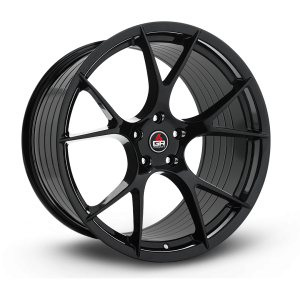
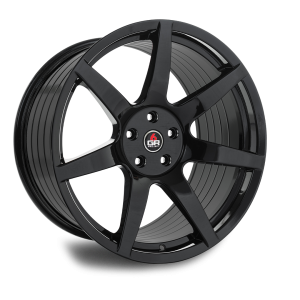
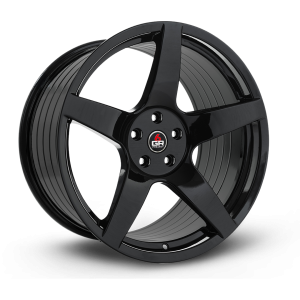
Three models carry this fitment at 20×9.5 +14 front and 20×11 +20 rear. Pick your model and finish and we build the set to your car. Pricing starts at $2,060 per wheel. Sets are built to order with a 6 to 10 week lead time, because each wheel is made for your car rather than pulled off a shelf.
Every model in our forged range can be built to this Charger and Challenger spec or to a spec of your own. That covers the TEN in monoblock forged, the SEVEN v2 and the two piece TEN-L. It also covers the fitments this page does not: a widebody car chasing the factory -2.5 offset, an AWD Charger that needs the numbers worked out properly, a wider front to match a 315 rear, or a big brake kit that changes the clearance math. Talk to a fitment expert and we will work it out before anything gets machined. Finishes are open across the full custom range, and current specials and accessories are worth a look while you spec the set.
Unsprung Mass
Where the Weight Actually Lands
Weight at the wheel is unsprung and rotating, so taking it off there does more work than taking it off anywhere else on the car. The suspension follows the road more closely, turn-in sharpens, and the brakes and driveline have less rotational inertia to fight.
We are going to be specific about which of our wheels does that on this platform, because the answer is not the same across all three.
The benchmark worth measuring against first is the cast wheel most of these cars left the dealer on. The Scat Pack WR2 20×9 has been scaled by owners at 32.2 and 34.0 pounds with center caps and balance weights and no tires, which is the best documented factory figure on the platform because it states what was included. Mopar sells its own forged 20×9 replacement claiming up to 8 pounds of weight saving per factory wheel, which tells you what Dodge thinks of that cast wheel too. Every Project 6GR wheel in this fitment comes in lighter than the WR2, in a wider size, at both ends.
Against the factory forged wheels the picture is sharper and narrower. The SRT and Hellcat 20×9.5 forged wheel has been scaled by owners between 28.5 and 29 pounds, and the widebody 20×11 forged wheel at roughly 31 pounds. Our TEN comes in at 25.90 pounds at 20×9.5 and 25.00 pounds at 20×11, so it is about 2.9 pounds off each front corner and roughly 6 pounds off each rear against the factory forged wheels, and 13.4 pounds off a full set of narrowbody SRT forged wheels. That is the lightweight choice in this fitment and it is not close.
The SEVEN at 28.90 and 29.70 pounds and the FIVE at 28.55 and 29.20 pounds sit essentially level with the factory forged wheel at the front and marginally under it at the rear, while being an inch and a half wider at the back. Those two are design choices rather than weight choices, and we would rather tell you that than dress up a number.
The Spun Forged process starts with a cast blank that is spun and formed under high pressure while heated. Compressing the barrel material yields a wheel that is lighter and stronger than a conventional cast wheel, without the lead time or cost of a full billet forging.
| Wheel | Size | Construction | Weight (lb) | vs Project 6GR |
|---|---|---|---|---|
| Front | 20x9.5 | ||||
| Project 6GR TEN | 20x9.5 +14 | Spun Forged | 25.90 | Baseline |
| Project 6GR FIVE | 20x9.5 +14 | Spun Forged | 28.55 | Baseline |
| Project 6GR SEVEN | 20x9.5 +14 | Spun Forged | 28.90 | Baseline |
| SRT / Hellcat OEM | 20x9.5 +18.5 | Forged | 28.5 to 29.0 | TEN saves 2.9 lb |
| Scat Pack WR2 OEM | 20x9 +22.5 | Cast | 32.2 to 34.0 | TEN saves 7.2 lb, 0.5" wider |
| Rear | 20x11 | ||||
| Project 6GR TEN | 20x11 +20 | Spun Forged | 25.00 | Baseline |
| Project 6GR FIVE | 20x11 +20 | Spun Forged | 29.20 | Baseline |
| Project 6GR SEVEN | 20x11 +20 | Spun Forged | 29.70 | Baseline |
| Hellcat / Redeye Widebody OEM | 20x11 -2.5 | Forged | approx. 31 | TEN saves 6.0 lb |
| Scat Pack WR2 OEM | 20x9 +22.5 | Cast | 32.2 to 34.0 | TEN saves 8.1 lb, 2" wider |
| Full set | Unsprung mass removed per car | ||||
| Project 6GR TEN set | 20x9.5 / 20x11 | Spun Forged | 101.80 | Baseline |
| Project 6GR FIVE set | 20x9.5 / 20x11 | Spun Forged | 115.50 | Baseline |
| Project 6GR SEVEN set | 20x9.5 / 20x11 | Spun Forged | 117.20 | Baseline |
| SRT / Hellcat narrowbody OEM set | 20x9.5 square | Forged | approx. 115.2 | TEN saves 13.4 lb total |
| Hellcat Widebody OEM set | 20x11 square | Forged | approx. 124.0 | TEN saves 22.2 lb total |
| Scat Pack WR2 OEM set | 20x9 square | Cast | approx. 132.4 | TEN saves 30.6 lb total |
Real Customer Builds
Charger and Challenger Builds Running Project 6GR
The Difference
Why Mopar Owners Run Project 6GR
One Fitment, Two Models
20x9.5 +14 and 20x11 +20 on the factory 5x115 pattern covers the Charger from 2006 and the Challenger from 2008, rear-wheel drive, every trim from SXT to Redeye. Verified on our own customer cars rather than derived from a chart.
JWL + VIA Certified
Independently tested to Japanese Light Alloy Wheel and Vehicle Inspection Association standards. Backed by a lifetime structural defect warranty and a one-year finish warranty.
Machined to the Hub
Cut to 71.5mm against a 71.6mm factory hub. The wheel rides on the hub, carries the load correctly, and never needs a centering ring.
Clears Factory Brake Packages
Verified against the four-piston Brembo on the Scat Pack and SRT8, the six-piston monoblock on the Hellcat and Redeye, and the Sport and Performance packages on base and R/T cars. No spacers, no modification. Factory TPMS sensors carry over on 2008 and later cars.
Common Questions
Dodge Charger and Challenger Wheel FAQ
Project 6GR builds one verified staggered fitment for both cars: 20x9.5 with a +14 offset front and 20x11 with a +20 offset rear, in the TEN, the SEVEN and the FIVE. It fits the rear-wheel-drive Charger from 2006 through 2024 and Challenger from 2008 through 2024, clears every factory brake package, and fits at stock ride height. From the factory these cars ran everything from a 17x7 to a 20x11 depending on trim and body style, which is laid out trim by trim in the tables above.
Both cars use a 5x115 bolt pattern, sometimes written 5x4.52 inches, with M14x1.5 studs and 60 degree conical seat lug nuts. It is the same across every model year of both nameplates from 2006 and 2008 respectively through 2024, on rear-wheel drive and all-wheel drive alike. The lug pattern did not change across the LX, LD or LC generations.
No, and this is the most common piece of wrong information about these cars. Several otherwise reputable sites publish 5x114.3 for the Charger and Challenger, including one dealership page and at least one major aftermarket retailer's fitment guide. The correct figure is 5x115. The difference is only 0.7mm across the pattern, which is exactly why it is dangerous: a 5x114.3 wheel can be forced onto 5x115 studs and it feels like it fits. What you have actually done is load the studs in bending and put the wheel out of concentricity. Do not run 5x114.3 wheels on these cars, with or without hub rings.
Within the Dodge and Chrysler family the 5x115 pattern covers the Charger, the Challenger, the Chrysler 300 and the Dodge Magnum. It also appears on a range of General Motors front-wheel-drive and crossover platforms. A shared bolt pattern is not a shared fitment though, because hub bore, offset window and brake clearance all vary by car. This page publishes a verified fitment for the Charger and the Challenger only.
The factory hub measures 71.6mm on both cars, every year. Project 6GR wheels for this fitment are machined hub-centric to 71.5mm, which leaves five hundredths of a millimeter of radial clearance. That is a line-to-line pilot fit, so the wheel seats on the hub and carries the load through it. No centering rings, ever. You will see 71.5 and 71.6 used interchangeably in the market; the 71.6 figure is the vehicle hub and 71.5 is the standard wheel machining target. What does not work is a universal bore of 72.5mm or larger, which leaves the lug nuts to both center and hold the wheel and is the reason those wheels ship with a bag of plastic rings.
They bolt on, in both directions, across every rear-wheel-drive year. The pattern, hub and hardware are identical. Three things to check before you swap. Factory offsets vary a lot by trim, so a narrowbody SRT wheel at +18.5 and a widebody wheel at -2.5 will sit very differently on the same car. TPMS splits at 2008, with 2006 and 2007 Chargers on 315MHz sensors that do not interchange with the 433MHz sensors used from 2008 forward. And center caps are trim specific rather than platform specific.
It depends on the year and the trim, which is why one number circulating as "the" spec causes trouble. Published values across this platform run 135 Nm on 2006 to 2010 cars, 150 Nm on 2011 to 2014 cars and on SRT models, and 176 Nm, which is 130 ft-lbs, on 2015 and later base and R/T cars. The 2020 Challenger owner manual lists SRT models lower than base models on the same car, at 111 ft-lbs. The Demon 170 is a separate case at 185 Nm. Torque to the figure in your own owner manual, use one-piece conical seat nuts rather than two-piece capped nuts, and re-torque after the first 50 to 100 miles.
Yes. The bolt pattern, hub bore and brake clearance are the same, and an 11 inch rear wheel is exactly what a widebody car was built around. The difference is stance. Our rear sits at +20 where the factory widebody wheel sits at -2.5, so the tire sits inside the flare rather than filling it to the outer edge. If you want to chase the factory widebody offset specifically, we build custom forged to spec. Contact us and we will work out the numbers.
This spec is developed for rear-wheel-drive cars and we do not publish it as AWD-approved. Factory AWD cars run a 7.5 inch wide wheel at +55 offset and Dodge never offered an AWD car wider than 20x8. The AWD front hub carries a halfshaft and a different knuckle, and the AWD track is narrower than the rear-wheel-drive car's. There is also no factory precedent at all for an 11 inch rear on an AWD chassis, and a staggered setup puts a continuous rolling diameter difference through an AWD driveline. If you have an AWD car, talk to our fitment team before ordering.
Yes. At 20 inches every factory brake package on these cars clears, including the six-piston monoblock Brembos with 390mm rotors on the Challenger SRT and 400mm rotors on the 2021 Charger SRT. Dodge shipped both of those brakes under 20 inch factory wheels, so diameter is not the constraint at this size. Spoke and barrel geometry is, and the TEN, SEVEN and FIVE are profiled for it. If you are running an aftermarket big brake kit, send us the kit and we will verify before anything ships.
Three packages. 275/40R20 front with 305/35R20 rear keeps both tires at factory sizes and factory diameters, which is the choice for a car that gets driven. 275/35R20 front with 305/35R20 rear is what five of the six Dodge builds in our gallery run, and it tightens the front visually without touching speedometer accuracy. 275/35R20 front with 315/35R20 rear is the widest we recommend, and its 28.68 inch rear diameter is identical to the factory 245/45R20, so your speedometer stays exact. Avoid a 30 series rear on either width. A 305/30R20 lands 5.2 percent under factory diameter and inverts the stagger.
Often, and it is the setup owners ask about most. The honest answer is that it depends on ride height, camber and tire brand, and that it cannot be promised sight unseen. On a narrowbody car the limiting contact point is inboard, at the inner fender liner and a formed metal protrusion inside the wheel well, and it shows up under compression and at steering lock rather than at rest. Molded width also varies between tire manufacturers on the same printed size. Tell us your car, its ride height and your alignment, and we will tell you whether to run the 315/35 or the 305/35.
Yes. Bolt pattern, hub bore and offset do not change with ride height. Drops through roughly 1.25 inches, which covers the Eibach Pro-Kit range, Mopar's Stage 1 springs and BMR's SP110 set, need no fender work on the factory-equivalent tire sizes. Past that, and specifically with a 315 section rear, plan on either stepping down to the 305/35 or addressing the inner liner, and get a proper alignment either way.
On 2008 and later cars your factory sensors carry over using standard valve stems, and a relearn is required after any wheel swap. A 2006 or 2007 Charger uses a different 315MHz sensor that does not interchange with later cars. Stem style also varies clamp-in or snap-in depending on how your car was built, so the sensor needs to be matched to the car rather than to the model year. Center caps are trim specific, so tell us your year and trim when you order and we will confirm cap fitment for your car.
There is no 2006 or 2007 Challenger. The LC Challenger launched for 2008, and every 2008 car was an SRT8 on a 20x9 forged wheel. The Charger is the 2006 and 2007 car, and this fitment covers it.
Ready to Dial In Your Mopar?
One verified staggered fitment, machined to the factory hub, in three designs and finishes built to your car. Pick your model and we build the set.
Not Sure Yet?
Send us your year, trim, body style and ride height and get a direct answer from someone who specs this chassis every week.

